Anita Lafferty

Position
Research Associate
fb_img_164762234311111

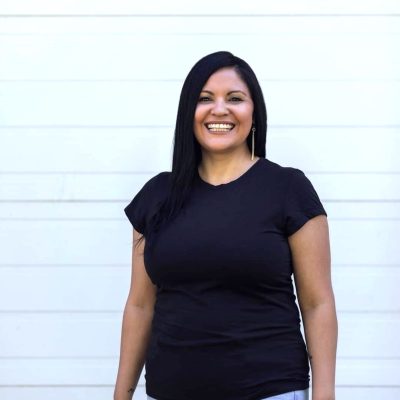
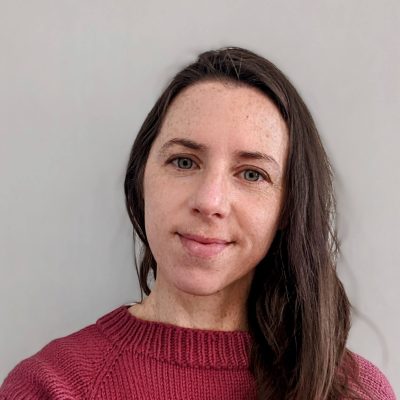
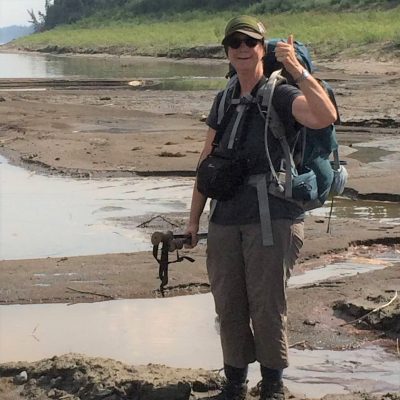
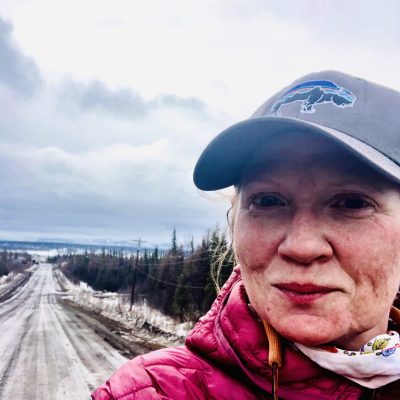
Anita Lafferty, PhD ( Łı́ı́dlı̨ı̨ Kṹé First Nation) moves with the stories, teachings, and responsibilities passed down by her ancestors. Rooted in Dene Cree ways of knowing and being, she carries forward matriarchal wisdom, on-the-Land education, and the revitalization of language and story. She has a PhD in Education from the University of Alberta (2022). Her doctoral research examined approaches of Indigenous curriculum perspectives grounded in Dene philosophy on the Land. She was awarded the 2023 Bacchus Award and the 2022 Margaret “Presh” Kates Doctoral Awards in Indigenous Education for her doctoral dissertation. She is currently a fellow with the International Arctic Science Committee (IASC) and an elected council for the International Arctic Social Science Association (IASSA). Her research includes learning from/with the Land, Indigenous methodologies, identity, healing, and matriarchal wisdom. As a storyteller, educator, and land-based researcher, Anita’s journey is rooted in relationships—listening, learning, and co-creating spaces where Indigenous youth, Elders, and communities lead. She carries forward the responsibility of amplifying voices that have been silenced, reimagining education through land, story, and resurgence.

Marcus Ilesanmi, PhD

Position
Research Associate
Email
marcus.ilesanmi@gmail.com
img_6694

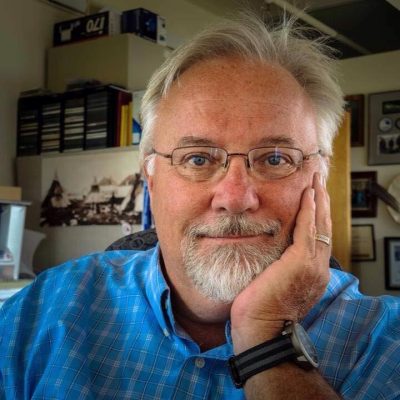
Education: PhD in Community and Population Health Sciences from the University of Saskatchewan, Canada in 2019

Research Statement:

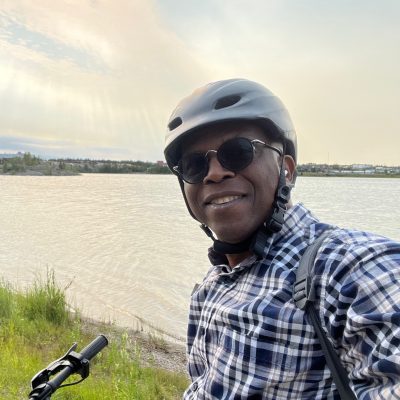
Marcus earned his PhD in Community and Population Health Sciences from the University of Saskatchewan, Canada in 2019. He also holds an MSc in International Health and Community Medicine from Charité – Universitätsmedizin of Humboldt University, Berlin, Germany, and a Master of Public Health (MPH) from the University of Ibadan.

Marcus engages with government agencies, academic institutions, and international donors to address systemic health challenges through evidence-based solutions. His research and publications focus on health inequities, including immunization coverage, infant nutrition, and access to family physicians.

He leads reproductive and perinatal health projects in the NWT, using research and quality improvement tools to develop equity-focused policies, monitor initiatives, and enhance person-centered care. By managing data on social determinants of health, he addresses program challenges, bridges access gaps and disparities to improve health outcomes. His work combines rigorous analysis with interdisciplinary collaboration to advance public health systems and interventions.

Some publications:

Kopec, J. A., Pourmalek, F., Adeyinka, D. A., Adibi, A.,Ilesanmi, M.M,… Alam, S., … & Elgar, F. J. (2024). Health trends in Canada 1990–2019: An analysis for the Global Burden of Disease Study. Canadian Journal of Public Health, 1-12.

Anne Leis, Wendy Verity, Marcus Ilesanmi, Amanjot Kaur, Chrys Henry, Vicky Holmes, Shirley (DeeDee) Maltman. A longitudinal comparison of effectiveness of integrative medical care to standard care on adult depression scores. Canadian Interdisciplinary Network of Complementary Medicine Researchers. Nov 1, 2023

Ilesanmi M., Olujobi B., Ilesanmi O., & Umaefulam V. (2023) Exploring data trends and providers’ insights on measles immunization uptake in south-west Nigeria. Pan African Medical Journal. 46:28.

Ilesanmi, M. M., Abonyi, S., Pahwa, P., Gerdts, V., Scwandt, M., & Neudorf, C. (2022). Trends, barriers and enablers to measles immunisation coverage in Saskatchewan, Canada: A mixed methods study. Plos one, 17(11), e0277876.

Ilesanmi, M. M., Adeyinka, D. A., & Olakunde, B. O. (2022). Sustainable Development Goals and childhood measles vaccination in Ekiti State, Nigeria: Results from spatial and interrupted time series analyses. Vaccine.

Awe, O. A., Okpalauwaekwe, U., Lawal, A. K., Ilesanmi, M. M., Feng, C., & Farag, M. (2019). Association between patient attachment to a regular doctor and self‐perceived unmet health care needs in Canada: A population‐based analysis of the 2013 to 2014 Canadian community health surveys. The International journal of health planning and management, 34(1), 309-323.

Marcus Ilesanmi, Cordell Neudorf. (2018). Measles Immunization in Saskatchewan – what barriers are there to achieving herd immunity threshold (92-95%). Canadian Public Health Association (CPHA) – Public Health 2018, Montreal, Canada. May 2018

Bryany Denning

Position
Research Associate
Location
Yellowknife
Phone
(867) 688-0035
Email
bryany.denning@etu.unige.ch
bree_photo

Education: PhD Candidate in Global Health at the University of Geneva, Faculty of Medicine

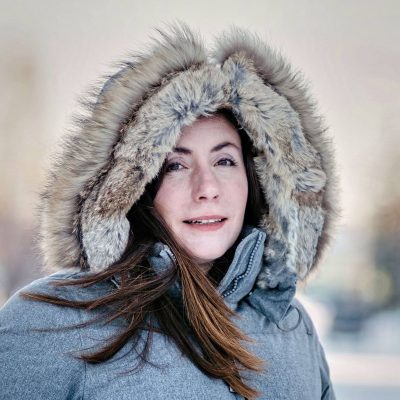
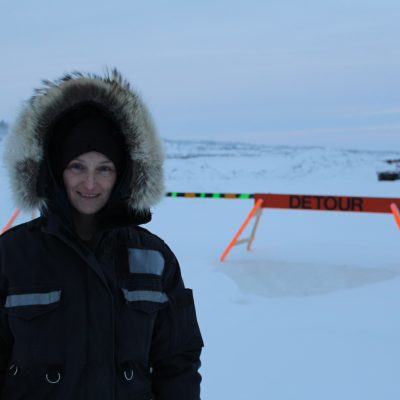
Bryany (Bree) Denning, MSc, MSW, moved to Yellowknife for an eight-month stint in 2008 and has made it her home for the past sixteen years.  Over this time, she has worked in social epidemiology, child and family services, homelessness, and problematic substance use in various roles in both the Government of the Northwest Territories and the NGO sector.  Currently, she is pursuing a PhD through the University of Geneva, focusing on substance use in the Northwest territories, while continuing her work in the social services sector as a Senior Advisor with the GNWT.  

Mallory Minerson

Position
Clinical Counsellor, GNWT Justice
Location
Fort Smith
Email
mallory_minerson@gov.nt.ca
headshotariminerson

Education: MA (NYU University), PhD student in Psychiatry at the University of Alberta.

Mallory is a PhD student in psychiatry at the University of Alberta whose research focuses on a discursive analysis of decolonization of medical and mental health documentation. She is a Registered Drama Therapist (MA New York University), Certified Canadian Counsellor, Certified Daring Way™ Facilitator-Clinician (Brené Brown’s work), Clinical Traumatologist (Traumatology Institute) and Licensed Practical Nurse. Mallory’s work is multimodal, trauma-focused and is guided by embodied arts-based research. With a background working in Forensic mental health, community outreach, grief, trauma and loss, with an all-ages population in community-based, individual and school-based sessions, Mallory has been both a clinician and Regional Clinical Supervisor in the NWT. She is currently practicing clinically for GNWT Justice. Ms. Minerson is passionate about moving drama therapy and performance into the quantitative research domain and is curious about the ways the inherent benefits of embodiment and art-based healing engagement intersect. Mallory has also completed the first level training in Narrative Medicine at Columbia University and is interested in the overlap of medical humanities, arts-based research, drama therapy and narrative medicine.

Katrina (Katy) Pollock

Position
Research Associate
Location
Yellowknife, NT
Email
22kp@queensu.ca
photo1

Education:

MPA, DSc. Candidate


Research statement:

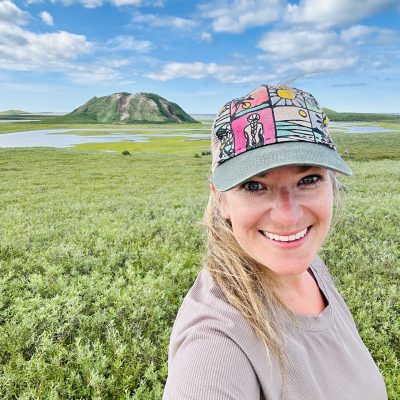
I am a settler researcher and program evaluator from the south shore of Nova Scotia who has worked with and for government and not-for-profit organizations for almost 15 years. I started my work in 2011 in northern Manitoba as a research assistant for a project investigating the impacts of mining and base metal smelting on children living nearby, and have worked in northern regions, mostly with children and youth, ever since. I am interested in policy approaches to child and youth health equity and have worked on the project design, support, and evaluation for Indigenous government-led early childhood intervention projects, evaluating funding and programming equity in the NWT Junior Kindergarten to Grade 12 education system, evaluating of the impacts of Integrated Care Teams on Indigenous patient experiences of cultural safety and harm in NWT primary health care settings, and evaluating school-based mental health services for NWT children and youth.

My work focuses on culturally safer and engaging ways for children and youth to have input into the government programs and services that impact them. Currently, I am a DSc. candidate at Queens’ University where I am studying ways that young children’s input can be included in program evaluations of daycare quality.


Tom Andrews, PhD

Position
Principal, Spruceroot Heritage Consulting, Sherwood Park, Alberta
Email
tomandr@gmail.com
photo

Position:

Principal, Spruceroot Heritage Consulting, Sherwood Park, Alberta

Fellow and Research Associate, Arctic Institute of North America, University of Calgary

Retired Territorial Archaeologist, Prince of Wales Northern Heritage Centre, GNWT, Yellowknife.

Education: PhD

Research Link: https://pwnhc.academia.edu/ThomasAndrews

Research Statement:

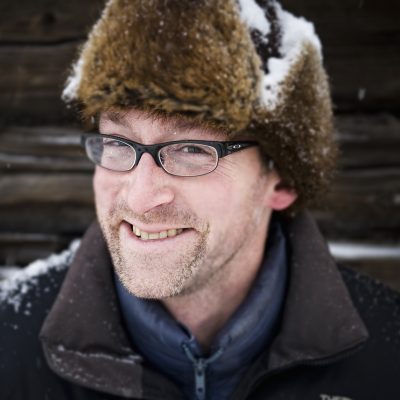
As a researcher, I am interested in collaborative approaches where many hands and minds can work together on a common objective. I am interested in the ontology and materiality of objects, relationships between humans and animals, links between technology and cosmology, the epistemology and ontology of Dene conceptions and experiences of the environment and ways of knowing, and the epistemological role of stories in the transmission of knowledge. I am also interested in research advocacy, especially with respect to issues of social justice and heritage protection. Methodologically, I am interested in travelling on the land in traditional ways to try to learn how people perceive and experience it. I am interested in learning about objects by having skilled practitioners and knowledge holders teach me how to make them.

Description of Research Program:

In the 1980s I worked for the Dene Nation as Director of the Dene Mapping Project, a research group assigned digitize traditional land use mapping data and to support negotiation of a comprehensive land claim.

From 1990 to 2017, I worked as an archaeologist with the Prince of Wales Northern Heritage Centre, where I specialized in projects that involved collaboration with Indigenous communities.  Working in a museum environment permitted me to work broadly within the disciplines of anthropology, ethnohistory and museum practice. Between 1990 and 1994 I worked collaboratively with the Tłįchǫ on a series of ethnoarchaeology projects focused on traditional birchbark canoe trails. These projects spawned a series of cultural revitalization projects based on features or artifacts that we found during the archaeological surveys.  For example, we recorded the remains of nearly 50 birchbark canoes which lead to a project to document the construction of a canoe that now resides in the local school in Edzo, NWT.  The main product of the project (besides the canoe) was a 28-minute documentary detailing the construction in Tłįchǫ with English subtitles. This partnership model was used again several years later when the PWNHC and Tłįchǫ collaborated on making two caribou skin conical lodge coverings, inspired by the repatriation of a century-old lodge from the University of Iowa, in which I played a key role. Often these cultural revitalization projects involve travelling with Indigenous elders to museums outside of the NWT to view objects in their collections. Beginning in 2005, we initiated the NWT Ice Patch Study, a project that combined the physical, biological, and social sciences with traditional knowledge to investigate past and present environmental and human change in the Mackenzie and Selwyn Mountains.  Collaborating with the Mountain Dene on 6000 years of ice patch archaeology led to important new joint cultural revitalization projects, including the documentation of the construction of a mooseskin boat (2013). 

Retiring in 2017, I maintain research interests through consulting activities and am currently working with the Dene Nation on two projects.

Significant Contributions:

Andrews, TD, Kritsch I, and Andrew L. 2022. The Mountain Dene, the Mooseskin boat, and

the Keele River. In Paddling Pathways: Reflections from a Changing Landscape, eds. B.

Henderson and S. Blenkinsop, 240-252. Regina: YNWP Publishing.

Andrews TD and Brink J. 2022. Using retroReveal and DStretch as complimentary techniques for

enhancing red ochre pictographs. Canadian Journal of Archaeology, 46(1):1-15.

Andrews TD, Kokelj SJ, MacKay G, Buysse J, Kritsch I, Andre A, and Lantz T. 2016. Permafrost thaw and

Aboriginal cultural landscapes in the Gwich’in region, Canada.  APT Bulletin, 47(1):15-22.

https://www.jstor.org/stable/43799259

Helwig K, Monahan V, Poulin J, and Andrews TD. 2014. Ancient projectile weapons from ice patches in

Northwestern Canada: Identification of resin and compound resin-ochre hafting adhesives. Journal of

Archaeological Science 41:655-665. https://doi.org/10.1016/j.jas.2013.09.010.

Andrews TD. 2013. Mobile Architecture, Improvisation, and Museum Practice: Revitalizing the Tłįchǫ

Caribou Skin Lodge. In: Anderson DG, Wishart R, & Vaté V, editors, About the hearth: Perspectives on the

Home, Hearth and Household in the Circumpolar North. Oxford: Berghahn Books. P 29-53.

https://doi.org/10.5860/choice.51-3917.

Andrews TD, and Buggey S. 2012. Canadian Aboriginal Cultural Landscapes in Praxis. In: Taylor K, and

Lennon J, (eds.) Managing Cultural Landscapes. London: Routledge. p. 253-271.

https://doi.org/10.4324/9780203128190-23.

Alix C, Hare PG, Andrews TD, and MacKay G. 2012. A Thousand Years of Lost Hunting Arrows: Wood

Analysis of Ice Patch Remains in Northwestern Canada. Arctic 65(5):95-117.

https://doi.org/10.14430/arctic4187.

Andrews TD, MacKay G, Andrew L, Stephenson W, Barker A, and the Shúhtagot’ine elders of Tulita.

2012. Alpine ice patches and Shúhtagot’ine Land Use in the Mackenzie and Selwyn Mountains,

Northwest Territories, Canada. Arctic 65(5):22-42. https://doi.org/10.14430/arctic4183.

Nicholas GP, and Andrews TD, editors. 1997. At a Crossroads: Archaeology and First Peoples in Canada.

Vancouver: Archaeology Press, Simon Fraser University.

Kristi Benson MA

Position
Heritage Specialist
Location
Department of Culture and Heritage, Gwich’in Tribal Council
Email
kbenson@gwichin.nt.ca
kristibenson

Kristi Benson has been affiliated with the Gwich’in Tribal Council Department of Culture and Heritage (and its predecessor, the Gwich’in Social and Cultural Institute) since 2004. She has more than 20 years of experience in conducting traditional land use, traditional knowledge, GIS, anthropological, oral history, archaeological, and other heritage projects. Her focus has been working with all aspects of heritage and culture with Gwich’in communities, especially through data management and mapping. She has also taught anthropology courses at the Aurora College and Malaspina University-College (now Vancouver Island University).

Through her work with the Department, she is a Governor General History Award Laureate.

Description of research program in the NWT/north:

Testing the Waters: Cultural and Heritage Oversight through a Gwich’in Research Forum

The Department of Culture and Heritage of the Gwich’in Tribal Council is the culture and heritage arm of the Tribal Council and handles various tasks under Chapter 25 (and others) of the Gwich’in Comprehensive Land Claim Agreement. The Department carries out research, partners and assists on projects from policy creation to international collaborations, reviews a broad variety of license and permit applications, and manages a vast collection of data. To best meet the needs and research orientation of the Gwich’in communities, the Department is considering the creation of a Gwich’in-specific and Gwich’in-appropriate research oversight body, similar to the Nę K’ǝ Dene Ts’ı̨lı̨ Forum in the Sahtu Region. The DCH proposes that the Gwich’in Forum will have knowledgeable Elders, youth, academics, land-users, and those with familiarity with policy and governance. The Forum would be a place to learn and share as much as it would be a body for oversight and decision-making assistance to the Department. This project will assess how such a Forum would best function in the GSA with GSA-specific governance and co-management structures, and how the Gwich’in communities would wish to participate.

Significant contributions:

1. Aporta, C, Kritsch, I, Andre, A, Benson, K, Snowshoe, S, Firth, W, Carry, D. 2014. The Gwich'in Atlas: Place Names, Maps, and Narratives. In: Taylor, DRF, Lauriault, TP (Eds.), Developments in the Theory and Practice of Cybercartography. Elsevier Science, 229-244.

(See the online cybercartographic atlas here: https://atlas.gwichin.ca/index.html)

2. Benson, KA. 2017. Gwich’in Knowledge of Insects. Report submitted to the Gwich’in Renewable Resources Board and Gwich’in Tribal Council Department of Cultural Heritage. Available from the Gwich’in Tribal Council Department of Culture and Heritage, Fort McPherson, NT.

3. Benson, KA. Gwich’in Knowledge of Divii (Dall’s Sheep). In prep. Available from the Gwich’in Tribal Council Department of Culture and Heritage, Fort McPherson, NT.

4. Benson, KA. 2018. Gwich’in Knowledge of Porcupine Caribou: State of current knowledge and gaps assessment. Report submitted to the Gwich’in Tribal Council and the United States Department of the Interior Bureau of Land Management. Available from the Gwich’in Tribal Council Department of Culture and Heritage, Fort McPherson, NT.

5. Benson, KA. 2012. Teetł’it Gwich’in, Gwichya Gwich’in, and Ehdiitat Gwich’in Journeys to Old Crow: Oral History About Trails, Meeting Places, and Diverse Travels. Report submitted to the Vuntut Gwich’in Government Heritage Branch. Available from the Gwich’in Tribal Council Department of Culture and Heritage, Fort McPherson, NT.

6. Benson, KA. 2005. Gwich’in Traditional Knowledge Study of the Mackenzie Gas Project Area and accompanying map booklet. Prepared for Gwich’in Tribal Council and Imperial Oil Resources Ventures Limited. Available from the Gwich’in Tribal Council Department of Culture and Heritage, Fort McPherson, NT.

Aaron John Spitzer

Position
Associate Professor, University of Bergen
Location
Bergen, Norway
Phone
+47 922 50 471
Email
aaron.spitzer@uib.no
dsc_2293b

Home Organization

Department of Comparative Politics, University of Bergen, Norway

Research Statement

For 25 years I have been a writer, editor, researcher, and teacher in the circumpolar Arctic, striving to understand, and shine a bit of light on, the region’s distinctive social and political challenges and possibilities. My commitment is especially to the Northwest Territories, not merely because of my deep, decades-long friendships and family connections there, but also because the territory is, in my view, the best place on Earth to study settler colonialism and to contribute to Indigenous self-determination.

Description of research program in the NWT/North

In all Canadian provinces and territories, political actors compete to win votes and increase their representation. Distinctly in the Northwest Territories, however, political actors have also long competed over who should be able to vote and over what principle should guide the apportionment of representation. This makes the NWT politically salient in its own right as well as a “laboratory” for the study of voting and representation more broadly. Historically, Yellowknife and/or settler actors have pressed for “universal voting” and “representation by population.” Countervailing actors have championed extended “durational residency” requirements for voting as well as rural and/or Indigenous “overrepresentation.” My work explores this competition through the lenses of Canadian constitutional law and liberal political theory. I have shown that this competition was at the crux of two key inflection points in modern NWT history: the 1982 public plebiscite that facilitated the creation of Nunavut, and the 1999 collapse of efforts to introduce Indigenous “power sharing” into the NWT legislature. I have further shown that this competition has continued, flaring up most recently in the 2016 Yellowknife v. NWT court battle over legislative redistricting.   

Scientific Contributions

1.Spitzer AJ and Selle P. 2020. Is nonterritorial autonomy wrong for Indigenous rights? Examining the ‘territorialisation’ of Sami power in Norway. International Journal on Minority and Group Rights: 1-24. doi.org/10.1163/15718115-BJA10009

2. Spitzer AJ. 2019. Colonizing the demos? Settler rights, Indigenous sovereignty, and the contested ‘structure of governance’in Canada’s North. Settler Colonial Studies 9: 525-541. doi.org/10.1080/2201473X.2019.1603605

3. Spitzer AJ. 2019. Constituting settler colonialism: the ‘boundary problem’, liberal equality, and settler state-making in Australia’s Northern Territory. Postcolonial Studies 22: 545-564. doi.org/10.1080/13688790.2019.1690763

4. Spitzer AJ and Selle P. 2019. Claims-based co-management in Norway's Arctic? Examining Sami land governance as a case of treaty federalism. Canadian Journal of Political Science 52: 723-741. doi.org/10.1017/S0008423919000301

5. Spitzer AJ. 2018. Reconciling shared rule: liberal theory, electoral-districting law and ‘national group’ representation in Canada. Canadian Journal of Political Science 51: 447-466. doi.org/10.1017/S0008423918000033

6. Spitzer AJ. 2015. Confronting 'Kymlicka's dilemma': settler voting rights, Indigenous representation and the 1998-99 electoral reapportionment in Canada's Northwest Territories. M.A. thesis, Department of Northern Studies, University of Alaska Fairbanks, Fairbanks, AK.


Debbie DeLancey

Position
Organizational Development Advisor
Location
Yellowknife, NT
Email
ddelancey33@gmail.com
delancy

Education: Master of Assessment and Evaluation

Home organization: Governing Council Member, Canadian Institutes of Health Research

Research statement:

My work with NWT Indigenous organizations and communities began in the mid-1970’s working with the Dene Nation to coalesce support across southern Canada in opposition to the Mackenzie Valley pipeline project; and over the next decade included community development work for the Inuit Tapirisat of Canada which led to the establishment of the Inuit Broadcasting Corporation; leading the Dene Nation’s socio-economic research to support interventions for environmental assessment processes; and working with the Fort Good Hope Dene Community Council to operate a research and consulting entity focusing on community-based research and Indigenous knowledge. 

During more than 25 years working at senior levels in a variety of departments for the Government of the Northwest Territories I developed an interest in the need for evidence-informed decision-making to inform program and policy design, to ensure that government initiatives were responsive to the needs of NWT residents and to determine whether results were being achieved.  My research focus is on evaluation, its potential to improve effectiveness of program delivery by all levels of government in the NWT, and particularly the need for culturally appropriate and Indigenous-led evaluation approaches to inform the design and delivery of programs by and for Indigenous peoples.

Description of research program in the NWT:

I am a Fellow of the Canadian Evaluation Society, working with Governing Council Member, Canadian Institutes of Health Research, to promote and develop capacity for Indigenous evaluation of health and health-related programming in the NWT.  My specific research interest is exploring the potential to develop collaborative evaluation approaches for Indigenous on-the-land programs, grounded in Indigenous values and methods with results that are relevant to Indigenous governments and communities, but also provide compelling evidence of program effectiveness for non-Indigenous government funders and philanthropic funders. 

Scientific Contributions

1. DeLancey, D. 2019. Indigenous Evaluation in the Northwest Territories: Opportunities and Challenges. Canadian Journal of Program Evaluation 34: 492-512.  doi: 10.3138/cjpe.68837

2. DeLancey, D. 2019. Introduction to Articles Prepared by CES Calgary 2018 Keynote Panel Members on Reconciliation and Culturally Responsive Evaluation – Rhetoric or Reality? Canadian Journal of Program Evaluation 34: 329-330.   doi: 10.3138/cjpe.67979

3. DeLancey, D. Changing the System: Improving Indigenous Health Outcomes in NWT through Policy and Practice. (forthcoming). Northern Public Affairs. (accepted for publication).

4. Kerber, K., Kolahdooz, F., Otway, M., Laboucan, M., Jang, S.L., Lawrence, S., Aronyk, S., Quinn, M., Irlbacher-Fox, S., Milligan, C., Broadhead, S., DeLancey, D., Corriveau, A., Sharma, S.  (2019). Opportunities for improving patient experiences among medical travelers from Canada’s far north; a mixed-methods study. BMJ Open 2019, 9:e030885, doi:10.1136/bmjopen-2019-030885.

5. DeLancey, D., Radu, I.,Enosse, L. and Ritchie, S. (2018).  Measuring Connection: Evaluating Land-Based Programs.  Northern Public Affairs: Vol. 6, Special Issue #1. 2018: p. 39-44.

Alexa Scully

Position
Independent Consultant
Location
Indigenous Leadership Initiative & Lakehead University
Email
AlexaJScully@gmail.com
scully

Education: PhD (Educational Studies)

Research statement

My doctoral research was conducted using the Self-Study of Teacher Education Practices (S-STEP) methodology, a rigorous cross-section of methods meant to support ethical relationality and service to the field of teacher education. The research question was: How is critical Place-based education in Canadian teacher education supporting Indigenous futurities in Canada by interrupting settler colonialism?

In Nunavik from 2017 – 2019 and now in the Sahtú, I have specialized in supporting relationships and educational opportunities between community knowledge holders and southern research scientists, and in finding funding for Land-based programming. I am passionate about research that is community-led and owned, that respects and centres Youth voices, and that actively works for community wellbeing, sovereignty and Lands.

Currently, I am working in various capacities with K’asho Got’ine and Tulit’a districts to make connections between what research has already been conducted, and what is needed, to support healthy futures with relation to water, fish and caribou, and Climate Change.

In future, I will connect back to my training and experience in education to engage the communities in Land-based learning and research opportunities with relation to the Dene and Métis laws and knowledges that can contribute to research, education and wellbeing in Sahtú.

Description of research program in the NWT

Currently, I am working with the newly established Indigenous Protected and Conserved Area Ts’udé Nilįné Tuyeta in K’asho Got’ine district in several capacities. Through my work with the Indigenous Leadership Initiative, I am supporting the establishment of the structures and governance for the new IPCA, including the research program for the next years. Also in K’asho Got’ine, I am supporting the Youth Connections program, funded through Public Safety Canada. This program has a strong Indigenous Evaluation component, led by Deborah DeLancey. I am also supporting Guardians programs and conservation and research in Tulit’a district in a few areas. There are a few potential new research collaborations in the works, but nothing concrete yet.

Selected Scientific Contributions

1. Scully, A. (2020). Land and critical place-based education in Canadian teacher preparation: Complementary pedagogies for complex futures. In M. Corbett & D. Gereluk (Eds.), Rural education in Canada: Connecting land and people (pp. 227-244). Springer Nature.

2. Scully, A. (2015). Unsettling place-based education: Whiteness and Land in Indigenous education in Canadian teacher education. Canadian Journal of Native Education, 1(38), 80-101.

3. Scully, A. (2012). Decolonization, reinhabitation and reconciliation: Aboriginal and place-based education. Canadian Journal of Environmental Education. (17), 148-158.

4. McGinty, M., Miller, H., Russell, J., & Scully, A., (2019). Centering the Critical in Place-based Education: Intersectional Opportunities in Environmental Education (Roundtable Session). Environmental Education Special Interest Group. American Educational Research Association Annual Meeting, Toronto, ON, April 5-9.

5. Epoo, J., Kutchaka, J., Nowkawalk, C., Padlayat, S., & Scully, A. (2018). Inuit Environmental Science: Land Survival and Culture for Innovative Inuit Futures (Scholarly Paper). Indigenous Peoples of the Americas Special Interest Group. American Educational Research Association Annual Meeting, New York City, New York, April 13-17.

6. Calderon, D., Munoz, M., Resendiz, R., Resendiz, R., Scully, A., & Solis, S. (2017). This is Yanaguana:  Reframing Indigenous Texas for Environmental Education (Symposium). Indigenous Peoples of the   Americas and Environmental Education Special Interest Groups. American Educational Research Association Annual Meeting, San Antonio, Texas, April 27-May 1.