
Research Projects - Archived Projects
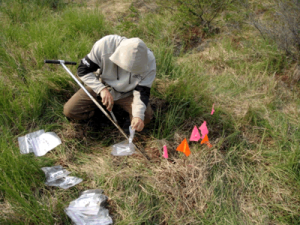
Cumulative Impacts Monitoring Program
Both traditional knowledge and scientific investigations suggest that the vegetation in the Mackenzie Delta region is changing. These shifts are likely the result of warming and increased disturbances (e.g. fires, permafrost slumps, roads, and infrastructure). The combined effects of disturbance,...
Read More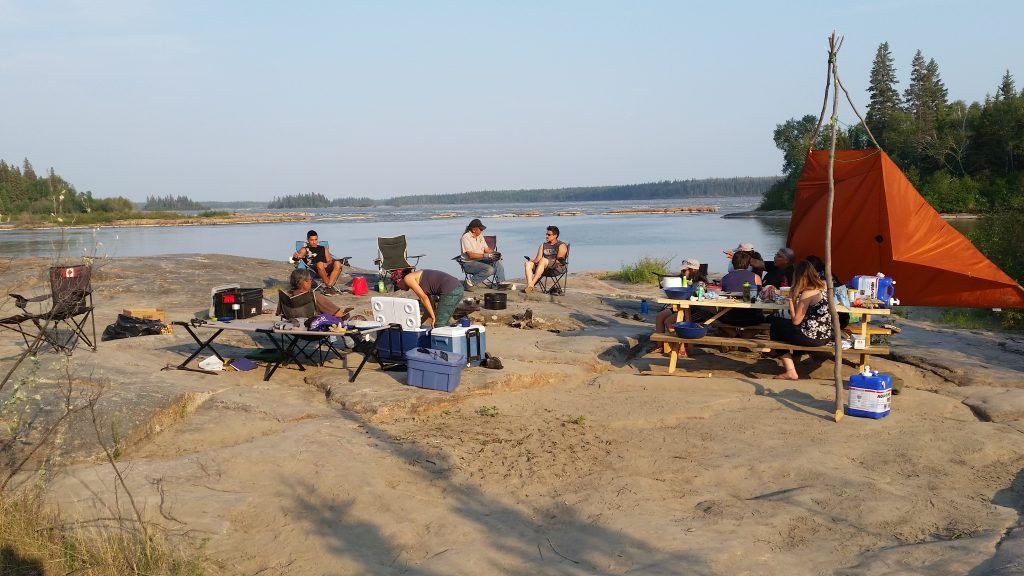
Cassette Islands Climate Change Project
The South Slave Research Centre is working in partnership with Smith’s Landing First Nation (SLFN) to conduct a community-based climate change study at a set of islands on the Slave River in an area known as the Cassette Rapids. The...
Read More
The Legendary Sky Project: South Slave Regional Initiative
The sky is an important part of the northern world, full of wonder, heritage, and wisdom. People have used it as a map to navigate great distances on land and water, and also to trace their histories and teachings since...
Read More
Illisarvik Bibliography
llisarvik is a small drained tundra lake on Richards Island, 130 km north of Inuvik, NWT, at the Beaufort Sea coast. Illisarvik is northern Canada's longest-running field experiment. It was conceived by Dr. J. Ross Mackay in the 1960s as...
Read More
Energy Demonstrations
In an effort to showcase available technologies for the production of renewable energy in northern communities, a demonstration project was installed at the Aurora Research Institute (ARI) in Inuvik. The system was built entirely from components readily available on the...
Read More
Terrestrial Food Chain
This project aims to look at bio-accumulation of perfluorinated compounds (PFCs) in a northern food-chain: vegetation – caribou- wolves. These compounds are emerging contaminants of concern in the Arctic, and they have been found in relatively high concentrations in caribou...
Read More
Healthy Foods
Healthy Foods North (HFN) is a community-based, multi-institutional, nutritional and lifestyle intervention program that began in the Beaufort Delta region of the NWT and in the Kitikmeot Region of Nunavut in 2006.
Read More
Arctic Collaborative Environment
Information about all research and exploration in the Northwest Territories (NWT) has been collected since at least the 1950s. Licensing first began with the federal government, then in 1984 the territorial government took over the responsibility with the implementation of the NWT Scientists Act. This...
Read More
Biomonitoring 2.0 – South Slave
Over the past four years, Environment Canada scientists have been working closely with scientists from the University of Guelph to develop a new approach to study how changes in the pattern of living organisms in the biosphere can be used...
Read More
Space Weather – PolarDARN
Space weather, fuelled by energetic particles and radiation from the Sun, can cause massive power outages, pipeline corrosion and radio blackouts, and can degrade GPS positioning and increase radiation dosage to airline pilots and passengers. The radiation can penetrate spacecraft...
Read More